Overview
Electro/thermochemical catalysis of carbon-neutral feedstocks into commodity chemicals with economic viability and environmental sustainability

Research Areas
CO₂ Capture & Conversion
AI ML-Based Designing Capturing Agents and Thermocatalysis
We develop advanced technologies for capturing CO₂ from industrial flue gases and the atmosphere. Our work covers the full CCUS chain from novel sorbent and solvent development to integrated capture-conversion systems that directly transform captured CO₂ into valuable chemicals.

CO₂ Electrolysis
Efficient Electrocatalysts and Scalable Electrolyzer
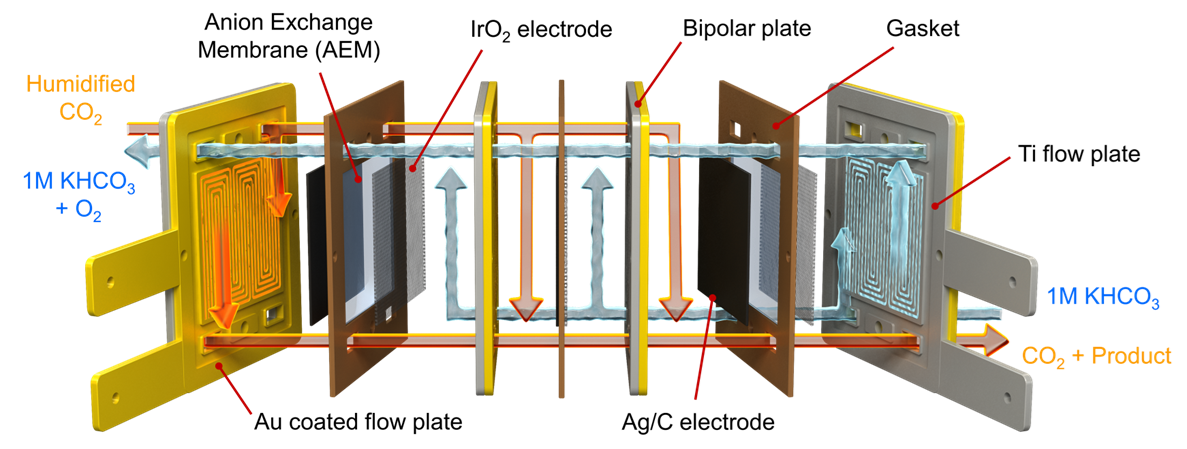
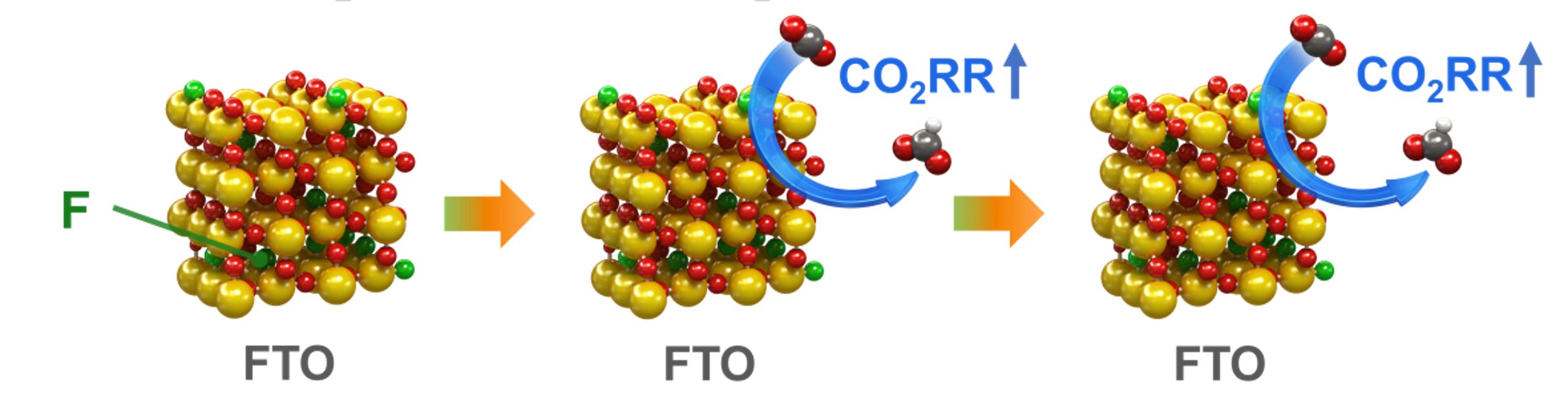
We develop efficient and selective electrocatalysts for both CO₂ reduction reaction and oxygen evolution reaction, addressing key challenges in activity, selectivity, and stability for practical CO₂-to-chemicals conversion. Our work extends to the engineering of electrochemical devices from zero-gap electrolyzers to PV-EC cells and their scale-up toward industrially relevant performance.
C–N Coupling
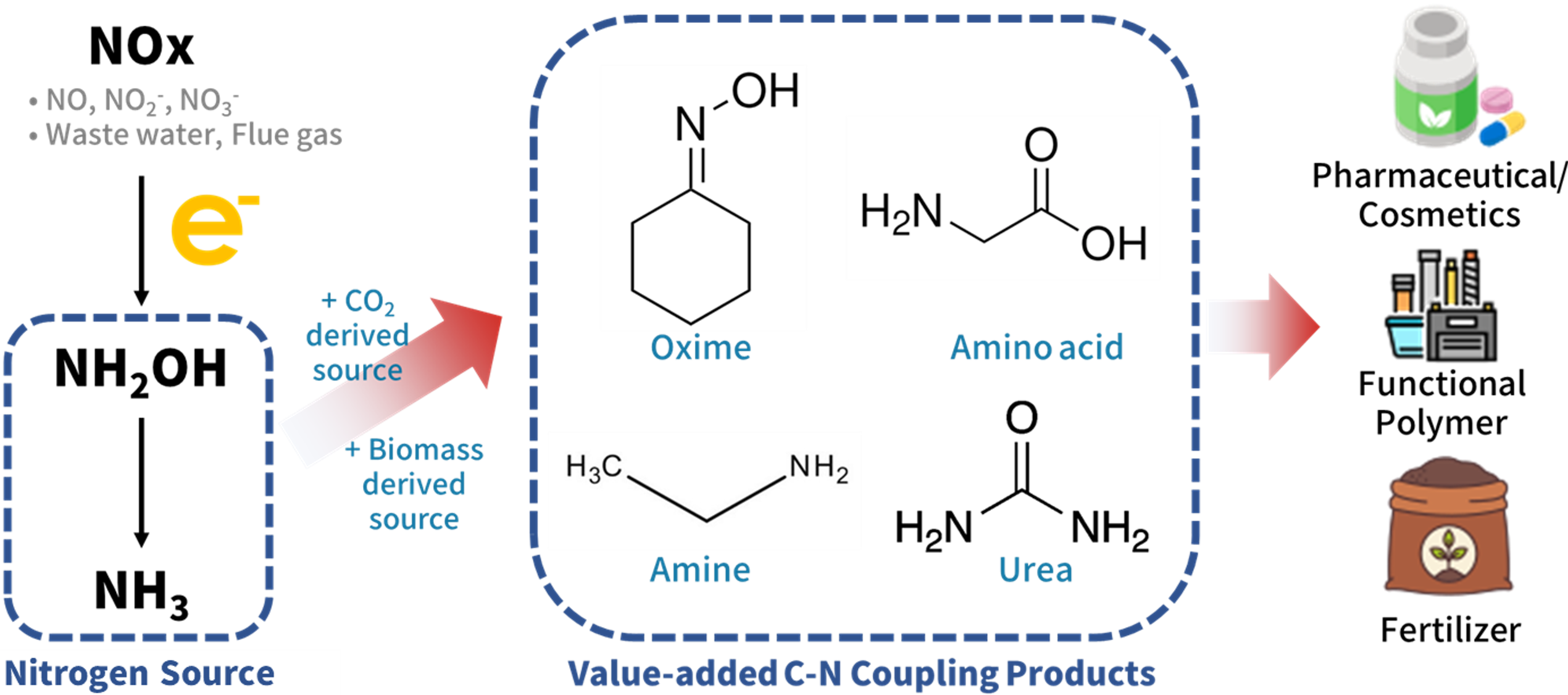
High-value-added C-N coupling products
We develop electrochemical C–N coupling strategies that convert waste-derived nitrogen species with CO₂- and biomass-derived carbon sources into value-added chemicals. This platform enables the sustainable production of nitrogen-containing compounds such as oximes, amines, amino acids, and urea while integrating waste remediation with improving the economic feasibility of electrochemical synthesis.
Ion-Exchange Polymers
Functional Polymers for CO₂ Electrolysis
For the engineering of membrane electrode assembly devices, we develop highly ion-conducting and chemically stable solid polymer electrolytes. These ion-exchange polymers serve both as membranes and binders for gas-diffusion electrodes in zero-gap reactors.


Biomass/Wastes Electrocatalysis
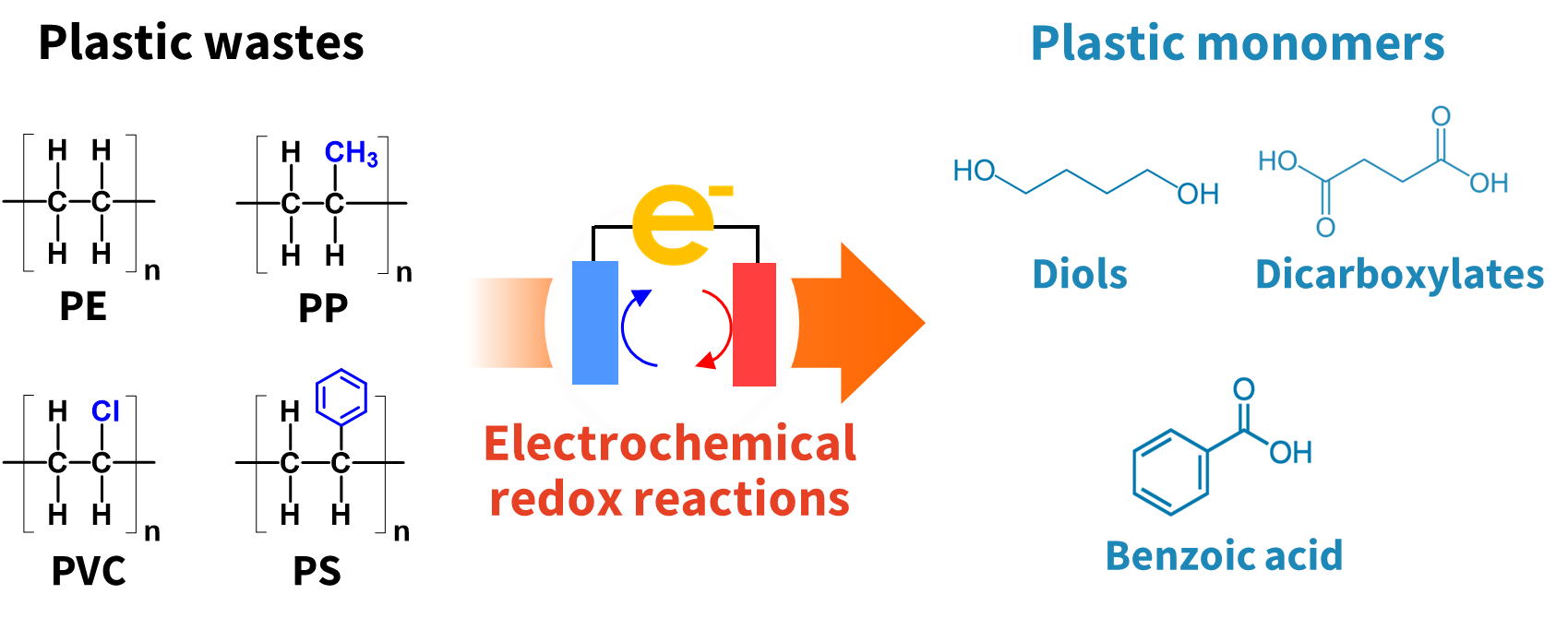
HIGH-TECH Electrocatalysis of Organic Molecules
We explore electrochemical routes to convert biomass and waste-derived feedstocks into high-value chemicals, replacing energy-intensive thermochemical processes. Our work focuses on co-production of valuable organic chemicals to upgrade economic feasibility and versatility of e-chemical synthesis.

in-situ/Operando Analysis
High-sensitive Interfacial Monitoring of Catalyst/Molecule
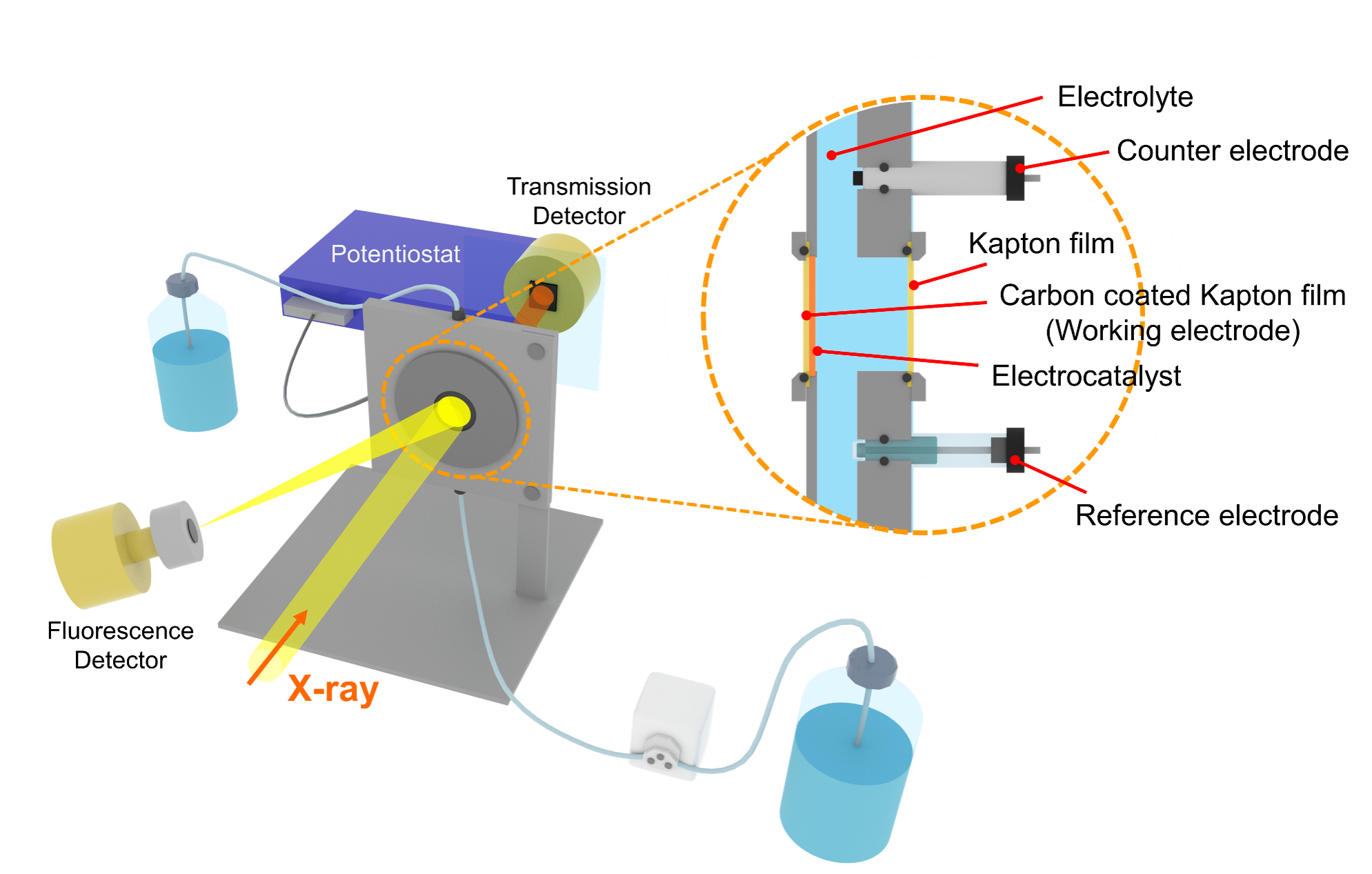
We employ real-time analytical tools to investigate electrochemical catalytic reactions at the interface. ATR-FTIR and Raman spectroscopy probe molecular behavior at the electrode surface, while soft and hard XAS reveals catalyst structural evolution under operating conditions. Our group operates dedicated high-sensitivity instruments and a KIST-exclusive beamline at PAL.
Process Engineering
System Design, Optimization, Multiscale modeling, TEA & LCA
We bridge the gap between laboratory breakthroughs and industrial implementation through rigorous process design, optimization, life-cycle assessment, and techno-economic analysis of electrochemical CO₂ conversion and hydrogenation processes.

Collaborators
Academia










National Labs







Industries